
As professionals in the Zigong lantern industry, we often get asked the same question: how are those massive lantern displays—tens of meters tall and stretching hundreds of meters wide—actually designed and built? Today, we're taking you behind the scenes, from the initial concept to the final installation.
Why Go Big?
In the world of Zigong lanterns, going big isn't just about size. It's about delivering real value in three key ways:
- Visual impact and share-ability.A lantern structure that towers over the landscape stops people in their tracks. That kind of scale creates a moment people instinctively want to capture and share. In the age of social media, a truly massive installation becomes a destination in itself—drawing crowds, generating buzz, and cutting down on marketing spend.
- Storytelling at scale.Some stories need room to breathe. Whether it's a winding dinosaur skeleton, a mythical mountain palace, or a scene from a hit game, only a large-scale format can deliver the full experience. It's what makes it possible to weave together technology, intellectual property, and immersive environments into something unforgettable.
- Activating a venue.A landmark lantern display can transform an entire site. It turns underutilized spaces—sloped terrain, open plazas, even water features—into can't-miss attractions. And once visitors gather, the surrounding restaurants, shops, and accommodations benefit too.
Design: Where Creativity Meets Structural Precision
Designing a large-scale lantern display is about much more than producing a beautiful illustration.
Take the 'Double Blessings'(Fulu Shuangzhi) lantern from Haitian Culture, one of the highlights of the 2026 Zigong Lantern Festival. Positioned in the main plaza of Zigong Chinese Lantern World, the centerpiece is a massive 30-meter-tall golden-red gourd—a traditional symbol of fortune and prosperity. Its surface is adorned with intricate cloisonné-style patterns, while flowing vine motifs wrapped around the exterior chase light effects that ripple across the surface.
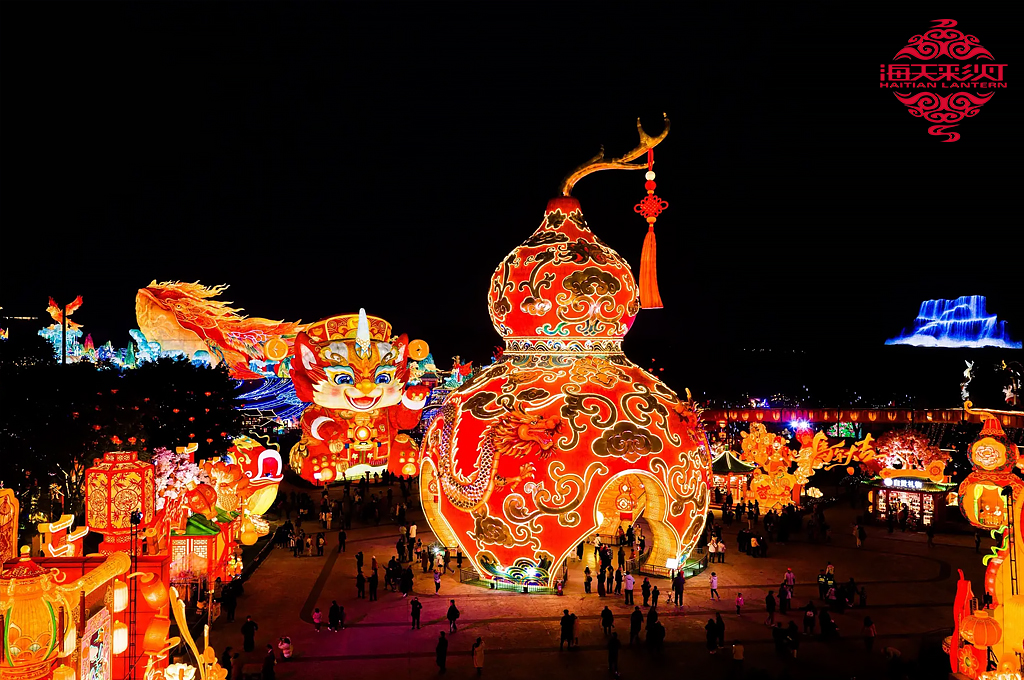
What truly sets this piece apart is that visitors can step inside. The design moves beyond the traditional one-way viewing experience. Inside, visitors are invited to touch a fu (fortune) character on the wall, triggering a subtle shift in lighting. In that moment, a luminous fu character projects down from above—a small, symbolic gesture of 'reaching out to receive good fortune.'Overhead, the domed interior comes alive with a swirling school of golden fish, their fins flickering as light ripples across the space.
It's a blend of traditional symbolism and hands-on interaction—a shift from simply looking at lanterns to truly engaging with them.

Construction: A Carefully Choreographed Process On-Site and Across Oceans
For domestic lantern exhibitions in China, construction typically happens directly on-site. Craftsmen assemble the structures from the ground up, tailoring them to the specific venue and making real-time adjustments. This approach allows greater artistic flexibility and on-the-fly refinements, but it requires extensive on-site labor and time.
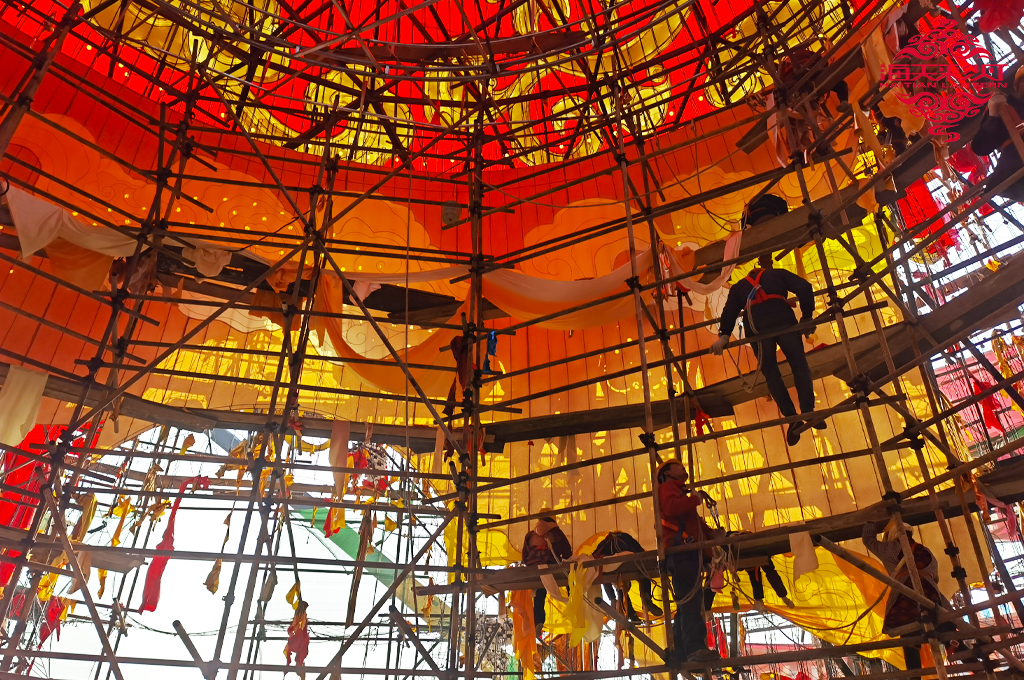
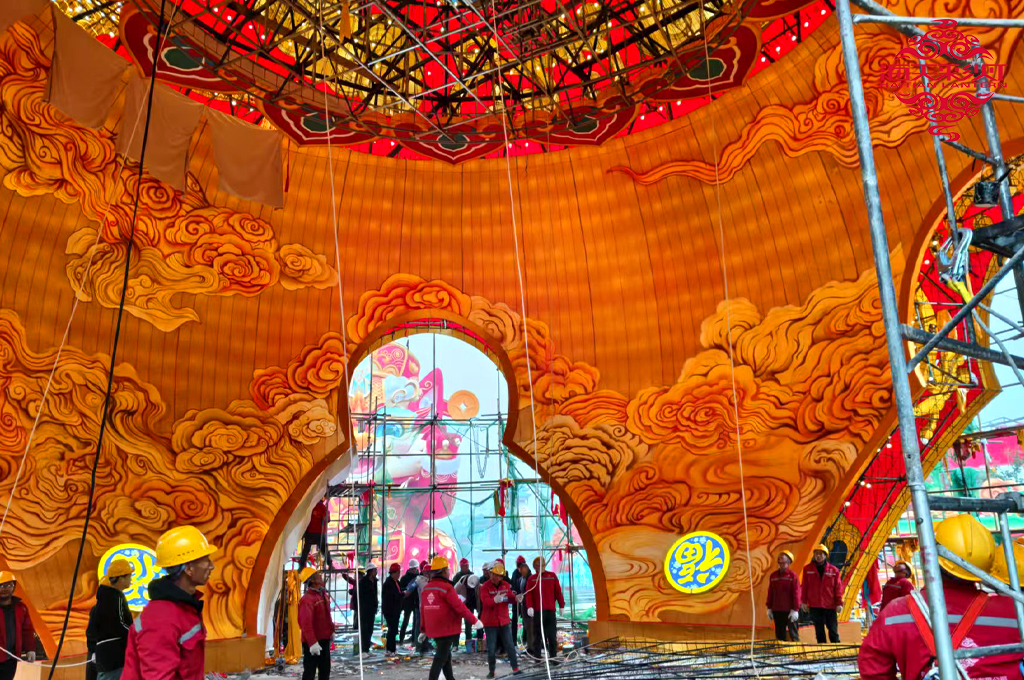
For international exhibitions, however, a different method is required. Large-scale lantern displays—some reaching 30 meters high with complex interior spaces and interactive elements—cannot be shipped fully built. Instead, each major component is prefabricated in sections at the workshop. Individual modules—complete with steel framing, wiring, fabric covering, and painting—are manufactured independently from the very beginning. Once finished, these sections are packed into standard shipping containers and transported overseas.
This is where structural engineering takes center stage in both scenarios. Every factor must be accounted for: the weight of the structure, wind load, foundation stability, and—for international shipping—container dimensions and module integrity. Engineers get involved early in the design phase to map out a plan that balances artistic vision with real-world safety and logistics.
Here's how the international process works (which also informs the modular thinking behind some domestic projects):
- Prefabrication in sections—The full structure is divided into transport—sized modules from the design stage. Each section is built from scratch in the workshop—steel framing, wiring, fabric covering, and painting are all completed before anything leaves the shop.
- On-site assembly—Once the modules arrive at the destination, the assembly team pieces them together in a precise sequence. Seams must line up perfectly, electrical connections must fit without issue, and the overall silhouette must remain seamless.
- Final integration and tuning—After assembly comes fine-tuning. Every single light point is checked. The entire system is tested to ensure the lighting effects behave exactly as designed, whether it's a sweeping chase pattern or an interactive trigger inside the structure.
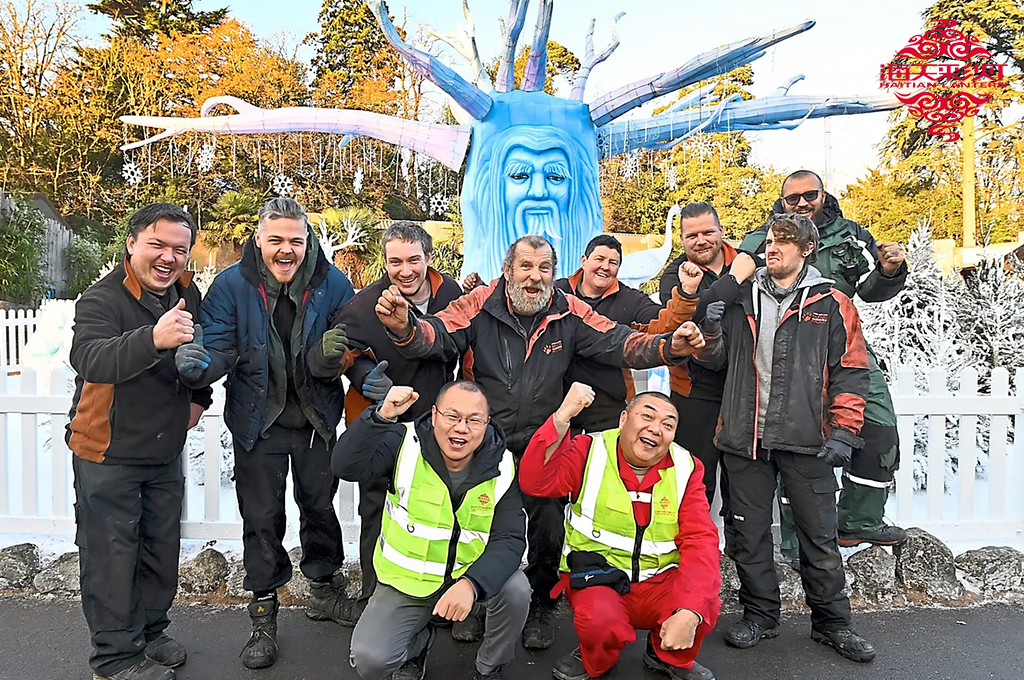
From Zigong to the World. Whether built on-site for a domestic audience or prefabricated in sections and shipped across continents, the same careful choreography ensures that every Zigong lantern—no matter the scale, terrain, or destination—is delivered safely and beautifully.
A truly remarkable lantern display is what happens when artistic vision meets engineering discipline. If you're planning a large-scale lantern event, we'd love to talk. From concept to completion, we'll help you create something unforgettable.
Post time: Apr-01-2026


