
A Lantern Festival is a form of nighttime cultural exhibition centered on large-scale artistic lantern installations. Through the use of light, color, and spatial design, lantern festivals transform outdoor spaces after dark, creating immersive environments that invite visitors to explore, stay longer, and engage with their surroundings. Today, lantern festivals are no longer limited to traditional celebrations but are widely used in cities, tourist destinations, and public spaces as a sustainable nighttime attraction.
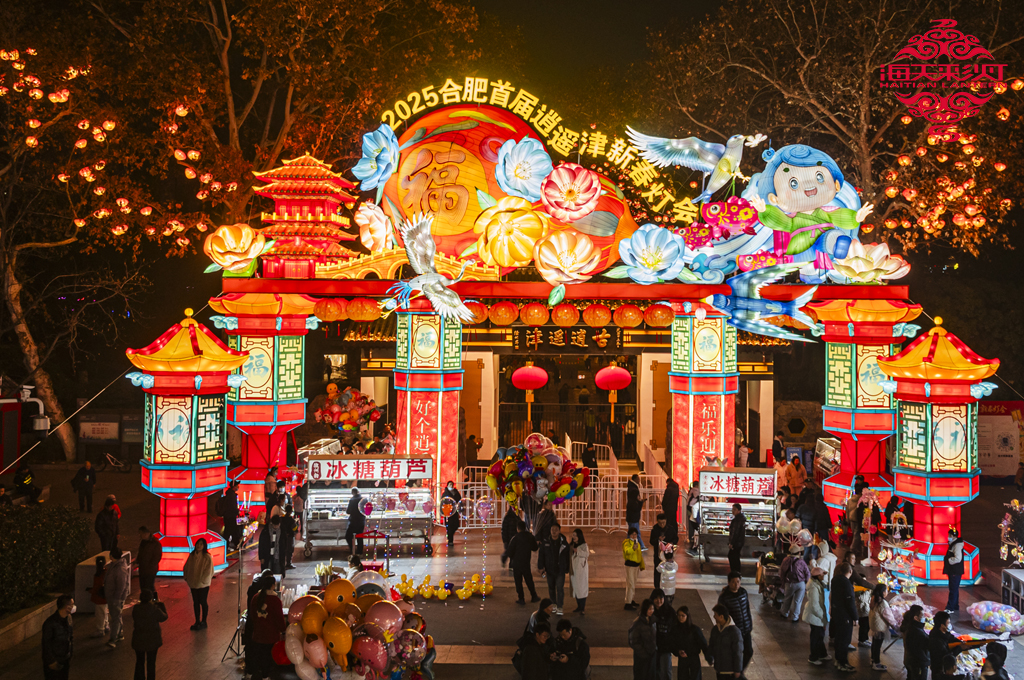
Modern lantern festivals rely on cohesive planning rather than isolated decorations. Carefully designed lantern installations, combined with overall site layout and visitor flow, guide guests through a sequence of themed visual experiences. Because lantern festivals communicate primarily through light and form rather than language, they are easily understood across cultures. This makes them particularly effective for international audiences and increasingly popular among cities and destinations seeking to enhance nighttime visitation.
The origins of lantern festivals can be traced back to China, with the Zigong Lantern Festival from Sichuan Province widely regarded as one of the most influential examples. With a history spanning more than one thousand years, the Zigong Lantern Festival began as a folk tradition associated with the Chinese New Year and the Lantern Festival. Over centuries, these symbolic lights evolved into highly sophisticated lantern art, forming a complete system of design, craftsmanship, and large-scale exhibition. Today, Zigong lanterns are commonly recognized as a foundation of modern large-format lantern displays.
Unlike ordinary LED string lights or light sculpture decorations, Zigong lantern festivals emphasize three-dimensional form and artistic expression. Lantern installations are typically built on large or small steel frameworks and covered with high-transparency materials such as satin fabric. Professional artists then refine the surfaces through hand painting and airbrush techniques. Large lantern structures can exceed 10 meters in height, and specialized frameworks can be designed for installations on land or water, allowing lantern festivals to be staged in parks, lakes, and urban waterfronts. This handcrafted lantern-making tradition gives the displays strong visual depth and a high level of nighttime recognizability.
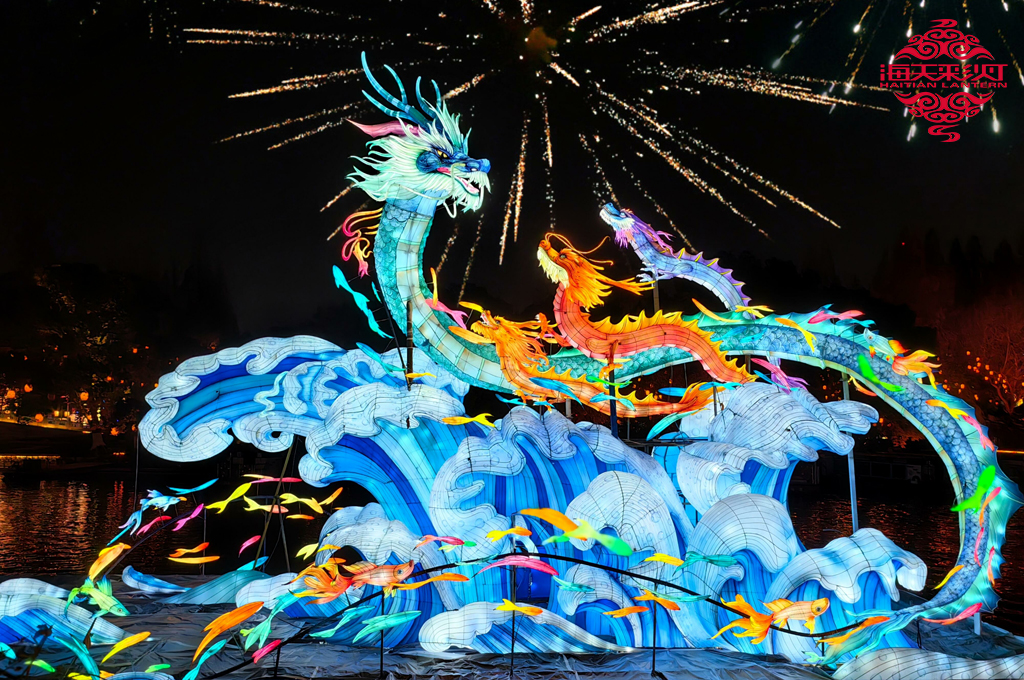
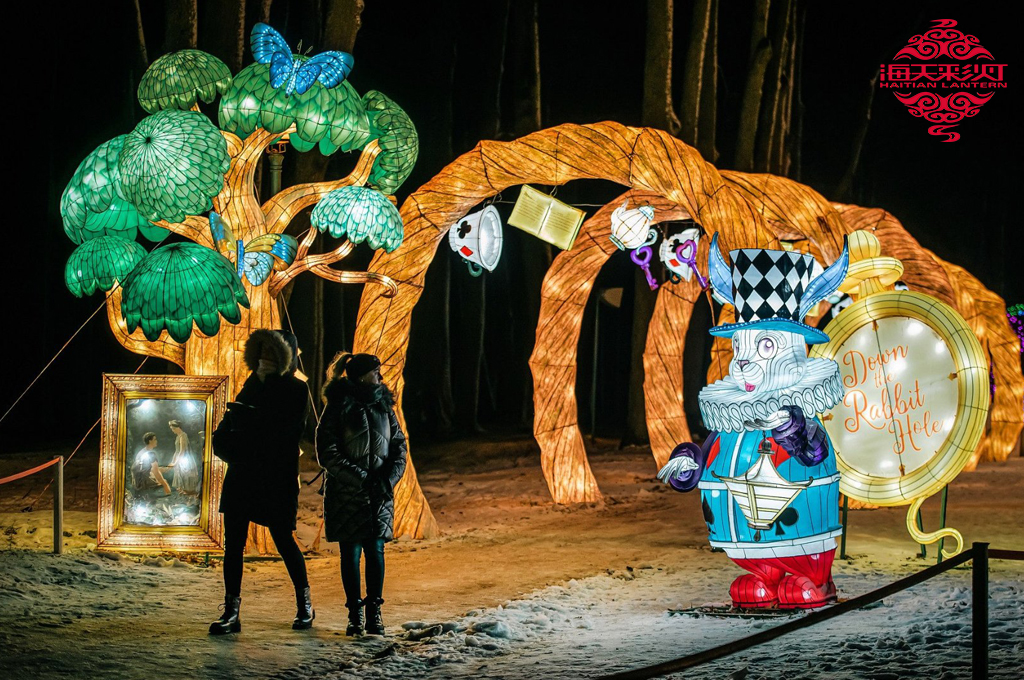
Lantern festivals are usually presented as complete thematic experiences rather than collections of individual lanterns. As visitors move through the site, they naturally transition between different themed areas. These themes may be inspired by history, culture, nature, seasonal celebrations, or storytelling, and can also be localized to reflect the cultural context of different countries and cities. This flexibility allows lantern festivals to adapt to a wide range of environments while remaining culturally accessible.
As a result, lantern festivals demonstrate clear value within tourism and urban operations. For visitors, they offer an intuitive and memorable nighttime experience. For city and destination managers, lantern festivals function as a proven tool to extend evening opening hours. Parks, scenic areas, and public spaces that traditionally close at dusk can be transformed into nighttime attractions, increasing overall site utilization.
In practical operation, lantern festivals are often run on a seasonal or limited-term basis, making them relatively easy to manage while keeping costs under control. Nighttime operations lasting several weeks or even months allow destinations to generate additional ticket revenue without placing pressure on daytime capacity, while also stimulating spending on food, retail, and related services. At the same time, lantern festivals help establish a strong nighttime identity for a city or destination, which can be amplified through visitor word of mouth and media exposure, supporting long-term tourism development.
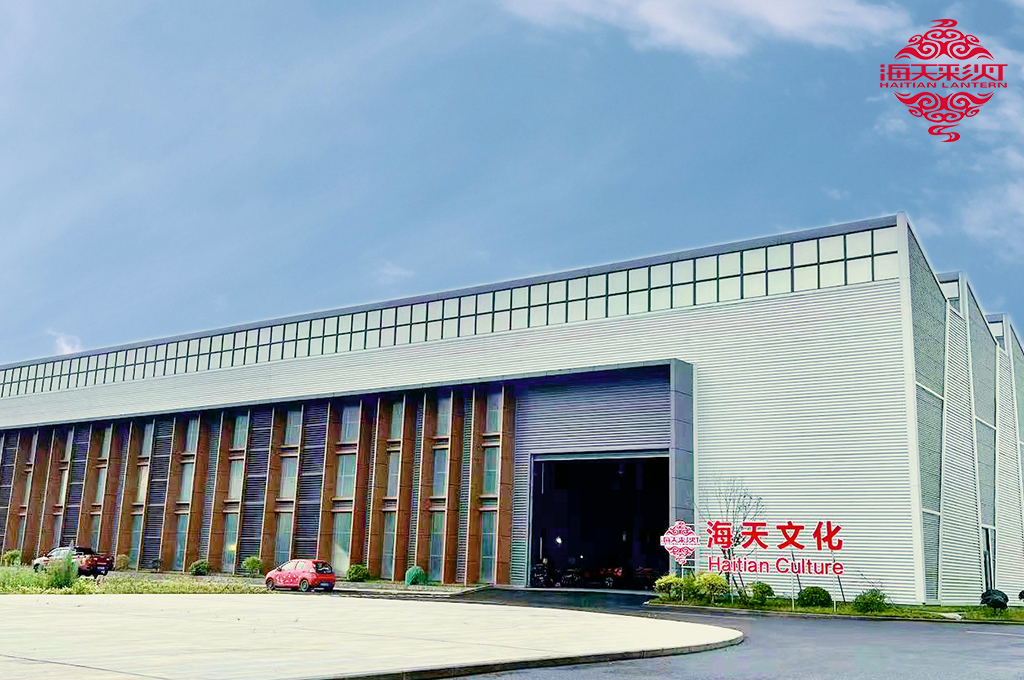
Building on the heritage of the Zigong Lantern Festival and the evolution of modern lantern exhibitions, Haitian Lantern has long been involved in the design, production, and delivery of lantern festival projects. Since 2005, Haitian Lantern has delivered more than 100 overseas lantern exhibitions across nearly 70 countries and regions worldwide, including first-time lantern festival presentations in almost 40 countries along the Belt and Road. These projects have reached over 10 million international visitors, with media coverage exceeding 500 million impressions. As the only publicly listed company in the lantern industry, Haitian Lantern has accumulated extensive experience in large-scale project management, international delivery, and long-term operation, contributing to the continued global application of lantern festivals as a nighttime cultural attraction.
As a cultural format that combines art, craftsmanship, and nighttime tourism, lantern festivals are increasingly becoming a practical choice for cities and destinations seeking to develop their night economy and enhance public cultural experiences.
Post time: Dec-26-2025


